How to Start Forex Trading for Beginners Without Blowing Your First Account
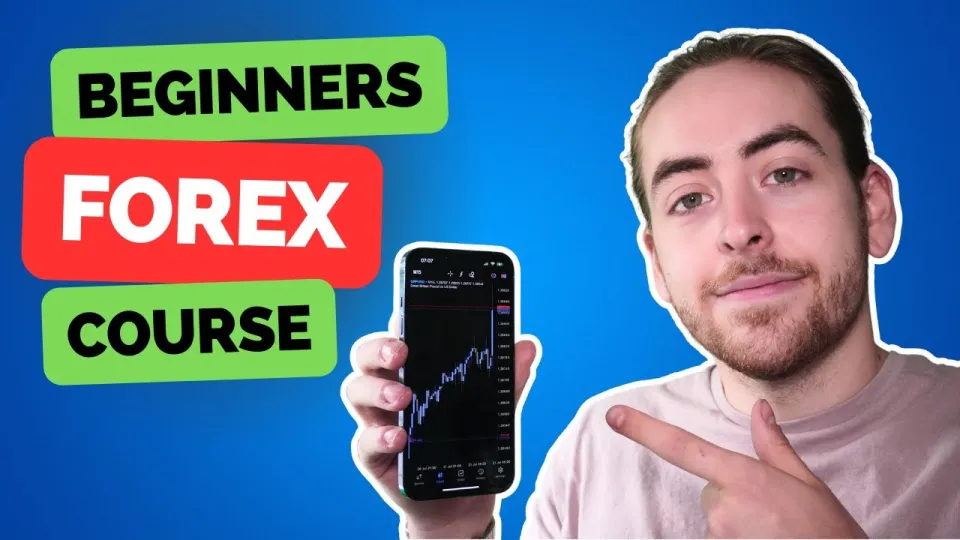
Video: Forex Trading For Beginners (FULL COURSE)
Want articles like this for your own video to promote it on YouTube and Google? Order them through the Telegram bot @sat_sit_bot. It writes articles around your video, embeds the video and publishes them on popular niche websites (no ads). Try it free: 50 articles on us.
· based on the channel JeaFx
Forex trading for beginners starts with understanding what the foreign exchange market is, how currency pairs work, and how to manage risk before placing a single trade. This guide walks you through the core components of forex, from broker setup to building a market edge, so you can approach the market with realistic expectations and a solid foundation. For a structured learning path, check out the free class at JeaFx.
What forex is and what gets traded
Forex is the global marketplace where national currencies are exchanged, and it operates 24 hours a day, five days a week across major financial centers. Unlike stocks, forex has no central exchange; trading happens over-the-counter between banks, institutions, and retail brokers. The most traded currency pairs include EUR/USD, GBP/USD, USD/JPY, and AUD/USD, which together account for the majority of daily volume. Currencies are always traded in pairs because each exchange involves selling one currency to buy another. For example, buying EUR/USD means you expect the euro to strengthen against the US dollar. The forex market is the largest and most liquid financial market in the world, with an average daily turnover of trillions of dollars, which means spreads are typically tight and execution is fast. Beginners should focus on the major pairs first because they have the most liquidity and the lowest transaction costs.
How money is made in forex
Profit in forex comes from correctly predicting the direction of a currency pair and closing the trade at a better price than you entered. If you buy a pair and its value rises, you profit; if you sell a pair and its value falls, you profit. The difference between the entry and exit price, multiplied by your position size, determines your profit or loss. Leverage allows you to control a large position with a small amount of capital, but it also magnifies losses. For instance, with 1:100 leverage, a $100 deposit can control a $10,000 position; a 1% move in the currency pair would result in a $100 profit or loss, which is 100% of your account. That's why risk management is non-negotiable. Professional traders typically risk no more than 1% of their account balance on any single trade, and they use stop-loss orders to limit potential losses. The goal is not to win every trade but to have a positive expectancy over a series of trades.
Broker and trading account setup
Choosing the right broker is one of the most important decisions a beginner makes because your broker determines your trading costs, execution quality, and safety of funds. A regulated broker should be licensed by a reputable authority such as the FCA, ASIC, or CySEC, and should segregate client funds from company assets. Look for tight spreads on major pairs, low commissions, and a user-friendly trading platform like MetaTrader 4 or 5. When opening an account, start with a demo account to practice without risking real money, then transition to a live account with a small deposit that you can afford to lose. Avoid brokers that promise guaranteed profits or use high-pressure sales tactics. The setup process typically involves verifying your identity, funding your account via bank transfer or card, and downloading the trading platform. Take your time to compare several brokers and read reviews from independent sources.
Building your market edge
A market edge is a repeatable trading strategy that gives you a statistical advantage over time, and it is built through backtesting, forward testing, and continuous refinement. Start by choosing a simple strategy based on price action, such as trading breakouts or reversals at key support and resistance levels. Define clear entry and exit rules, including stop-loss and take-profit levels, and then test the strategy on historical data to see how it would have performed. This process, called backtesting, helps you understand the strategy's win rate, risk-reward ratio, and maximum drawdown. Once you have a profitable backtest, move to a demo account for forward testing to account for real-time market conditions, spreads, and slippage. Keep a trading journal to record every trade, including the reason for entry, the outcome, and your emotional state. Over time, the journal reveals patterns in your behavior and helps you eliminate mistakes. Remember that no strategy works all the time; the key is to manage risk so that losing streaks do not wipe out your account.
Mindset and expectations
Trading is a business, not a hobby or a get-rich-quick scheme, and treating it as such is essential for long-term success. Most beginners lose money in their first year because they overtrade, risk too much, or let emotions drive their decisions. Set realistic expectations: even professional traders only win about 50-60% of their trades, and profits come from managing risk-reward ratios effectively. Develop discipline by sticking to your trading plan, avoiding revenge trading after a loss, and taking breaks when you feel stressed. The psychological aspect of trading is often underestimated; fear and greed can lead to impulsive decisions that destroy accounts. Many traders find it helpful to meditate, exercise, or keep a separate journal for emotions. Remember that consistency and patience are more important than chasing quick profits. The market will always be there, so there is no need to rush.
Common beginner questions and concerns
New traders often wonder how much capital they need to start, and the answer is that you can start with as little as $100, but you should only risk a small percentage per trade. Another common concern is the fear of losing money, which is natural but should be managed through proper risk management and a demo account. Many beginners also ask about the best time to trade; the most liquid sessions are the London and New York overlaps, when volatility and volume are highest. Some worry about the legitimacy of forex trading, but regulated brokers and transparent execution make it a legitimate business. Finally, beginners often underestimate the time required to become profitable; it can take months or years of practice and learning. The key is to focus on the process rather than the outcome and to continuously educate yourself.
Useful links
- Free forex class by JeaFx – access a structured beginner course and live guidance.
- JeaFx mentorship program – master trading under direct guidance.
- JeaFx on Instagram – daily tips and market insights.
- JeaFx Free Telegram – join the community for discussions and updates.
Final thoughts
Forex trading for beginners requires a solid understanding of the market, strict risk management, and a disciplined mindset. By following the steps outlined in this guide—learning what forex is, how money is made, setting up with a regulated broker, building a market edge, and managing your psychology—you can avoid the common pitfalls that catch most new traders. Remember that trading is a journey, not a destination, and continuous education is key. For a comprehensive beginner course, consider the free class at JeaFx. The channel JeaFx provides valuable insights and practical guidance for traders at all levels.
Key takeaways
- Forex is the global currency market where currencies are traded in pairs; the most liquid pairs include EUR/USD, GBP/USD, and USD/JPY.
- New traders should risk no more than 1% of their account per trade and keep a trading journal to track performance.
- A broker provides leverage, but high leverage amplifies both profits and losses; choose a regulated broker with tight spreads.
- Building a market edge requires a repeatable strategy, backtesting, and understanding price action rather than relying on indicators alone.
- Mindset and expectations are critical: trading is a business, not a get-rich-quick scheme, and most beginners lose money in the first year.
Source: Forex Trading For Beginners (FULL COURSE) · Markdown version
Questions & answers
How much money do I need to start forex trading?
You can start with as little as $100, but it's recommended to begin with a demo account to practice without risk. Once you're consistently profitable on demo, start with a small live account that you can afford to lose. Remember to risk no more than 1% of your account per trade.
What is the best time to trade forex?
The best times to trade are when the market is most liquid, typically during the London and New York sessions, especially when they overlap (8:00 AM to 12:00 PM EST). These periods offer tighter spreads and higher volatility, which can present more trading opportunities.
How long does it take to become profitable in forex?
Becoming consistently profitable can take months or even years of practice and learning. It depends on your dedication, ability to follow a trading plan, and willingness to learn from mistakes. Focus on the process and risk management rather than rushing to make money.
Do I need a lot of indicators to trade forex successfully?
No, many successful traders rely primarily on price action and a few key levels rather than a clutter of indicators. A simple strategy with clear rules and proper risk management is often more effective than a complex system. Backtest your approach to ensure it has an edge.