Crypto Holders Face a Massive Regulatory Warning
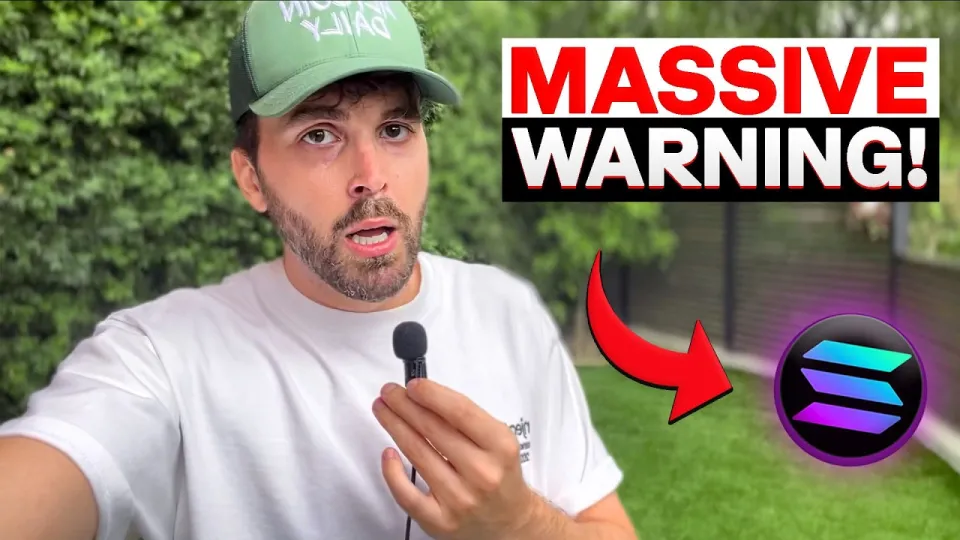
Video: My MASSIVE Warning To Crypto Holders
Want articles like this for your own video to promote it on YouTube and Google? Order them through the Telegram bot @sat_sit_bot. It writes articles around your video, embeds the video and publishes them on popular niche websites (no ads). Try it free: 50 articles on us.
· based on the channel Altcoin Daily
Crypto holders face a massive warning about the structural risks that sit around their assets rather than in the price chart: regulatory pressure, platform and custody decisions, and the tendency to treat an exchange balance as ownership. The practical answer is to verify where coins are held, spread exposure across platforms and jurisdictions, and keep a meaningful share in self-custody. Altcoin Daily devotes the video to exactly this theme, and readers who want to test a new venue can unlock the $500 Weex deposit bonus while keeping the warning in mind.
What the crypto warning actually covers
The warning is about control, not about a predicted crash. The core argument is that a holder who never moves coins off an exchange is exposed to business decisions, compliance reviews and account restrictions that have nothing to do with the asset's fundamentals. Regulation is the loud part of that story, but custody is the quiet part, and custody is where the damage usually happens first.
A second layer is the platform itself. The video pushes viewers toward specific venues, including a promotion with a bonus code, which is exactly why the custody point matters more, not less: the same channel that recommends a platform also warns that no platform should hold everything. Treat any bonus as a marketing offer with conditions attached, not as a reason to concentrate funds.
A third layer is behavioral. Holders who check prices daily but never check withdrawal settings, whitelists or backup phrases are the ones most likely to be caught out. The warning is less about the market and more about the checklist a holder should be able to complete from memory.
Self-custody as the first line of defense
Self-custody means the private keys sit with the holder, not with a company. That single change removes exchange insolvency, account freezes and withdrawal pauses from the risk list, and replaces them with a different responsibility: protecting the seed phrase. The trade-off is real, but it is a trade-off a holder can actually manage.
A workable routine looks like this:
- Move long-term holdings to a hardware wallet and confirm the recovery phrase is written on paper or metal, never stored as a photo or a cloud note.
- Keep only working capital on exchanges, sized to what would be tolerable to lose for the length of a withdrawal freeze.
- Test a small withdrawal first whenever a new address or network is used, then send the rest.
- Review device firmware and wallet software before large transfers, not after.
- Store the backup in a second physical location so a single fire or flood does not erase access.
None of these steps require predicting the market, which is why they are more reliable than any price call. They also make the warning actionable for holders who have no intention of selling.
Platform and jurisdiction diversification
No single venue, stablecoin issuer or banking partner should be able to freeze an entire portfolio. Diversification here is not about altcoins; it is about counterparties. Spreading balances across at least two or three platforms, and ideally across more than one legal jurisdiction, reduces the chance that one compliance decision becomes a personal liquidity crisis.
Concentration risk also hides inside stablecoins and yield products. A holder who keeps everything in one yield vault on one exchange has effectively one counterparty, whatever the underlying asset says on the label. The same logic applies to tokens tied to lending protocols: the question is not only whether the token is good, but whether the holder understands what backs the yield.
The video's own promotional links illustrate the tension. A second offer, a Bitunix registration with a $10k bonus and no KYC, sits alongside the Weex promotion. Two venues, two sets of terms, two sets of risks. Using both is diversification only if the holder reads the conditions and keeps the bulk of the portfolio elsewhere.
Questions crypto holders keep asking
The most common doubts from the audience are practical rather than philosophical. One recurring theme is whether mainstream brokerage apps are safe enough for crypto exposure; the honest answer is that a brokerage wrapper adds a layer between the holder and the asset, and that layer has its own rules. Another is whether a specific token or lending protocol should be avoided entirely, when the real question is what role that position plays in the portfolio.
A third theme is asset selection. Viewers repeatedly ask why certain large-cap coins rarely get airtime, and whether coins that ignore regulation are the safer bet. The useful framing is that regulatory exposure varies by asset and by how it is held, so the answer depends on the holder's jurisdiction and custody setup, not on a slogan.
A fourth theme is timing: some viewers joke about waiting for a much later bull run, others argue the biggest risk is not owning crypto at all. Both positions contain a real point. Missing exposure is a risk, and so is holding exposure in the wrong place. The warning in the video is aimed squarely at the second problem, because it is the one a holder can fix today.
Practical checklist before the next market move
A holder can act on the warning without selling anything. Start by listing every platform where funds sit, including forgotten accounts, and note which ones allow withdrawals without extra verification. Then confirm that each hardware wallet backup is readable and that at least one person the holder trusts could recover access in an emergency.
Next, review withdrawal whitelists and two-factor authentication, remove old API keys, and check whether any yield position depends on a single counterparty. Finally, write down the conditions attached to any bonus or promotional deposit, since locked funds behave differently from free ones during a stress event.
Holders who complete this checklist will find that the warning is less frightening than it sounds. Most of the exposure it describes is self-inflicted and reversible, which is a much better position than waiting for a regulator or an exchange to make the decision first.
Conclusion
The warning to crypto holders is ultimately about ownership: who controls the keys, who controls the account, and how many counterparties stand between a holder and their coins. Regulation will keep changing, and platforms will keep changing their terms, but a portfolio split across custody setups and jurisdictions is far harder to disrupt than one concentrated balance. Altcoin Daily's breakdown is a useful prompt to audit that setup now rather than during a crisis. Readers who want to explore one of the promoted venues can claim the Weex welcome bonus, while keeping the bulk of holdings in self-custody.
Key takeaways
- Altcoin Daily frames regulation and platform/custody risk as the main structural threat to crypto holders, not price volatility.
- Self-custody (hardware wallets, seed phrase offline) is presented as the core defense against exchange and counterparty risk.
- Diversifying across platforms and jurisdictions reduces exposure to a single regulator or company decision.
- The video includes promotional links to Weex ($500 deposit bonus) and Bitunix ($10k bonus, no KYC).
- Viewers debate whether 'not owning crypto' or 'not being in' is the bigger risk, and ask why some assets like XRP are rarely discussed.
Source: My MASSIVE Warning To Crypto Holders · Markdown version
Questions & answers
Is the warning about a coming price crash?
No. The focus is on structural risk: regulation, platform decisions and custody. Price volatility is expected in crypto, but an account freeze or a lost seed phrase can remove access to assets permanently, which is a different kind of loss and one a holder can prepare for.
Should crypto holders avoid exchange apps entirely?
Not necessarily. Exchanges are useful for buying, selling and short-term trading. The practical rule is to keep only working capital on a platform, move long-term holdings to self-custody, and avoid depending on a single venue for everything.
How many platforms should a portfolio be spread across?
Two or three venues in different jurisdictions is a reasonable minimum for most holders. The goal is to ensure that one compliance review, outage or insolvency event cannot block access to the entire portfolio at once.
Do deposit bonuses change the risk picture?
They can, because promotional funds often come with lock-ups, trading requirements or verification conditions. Read the terms before depositing, and never move a large share of a portfolio into a venue just to qualify for a bonus.